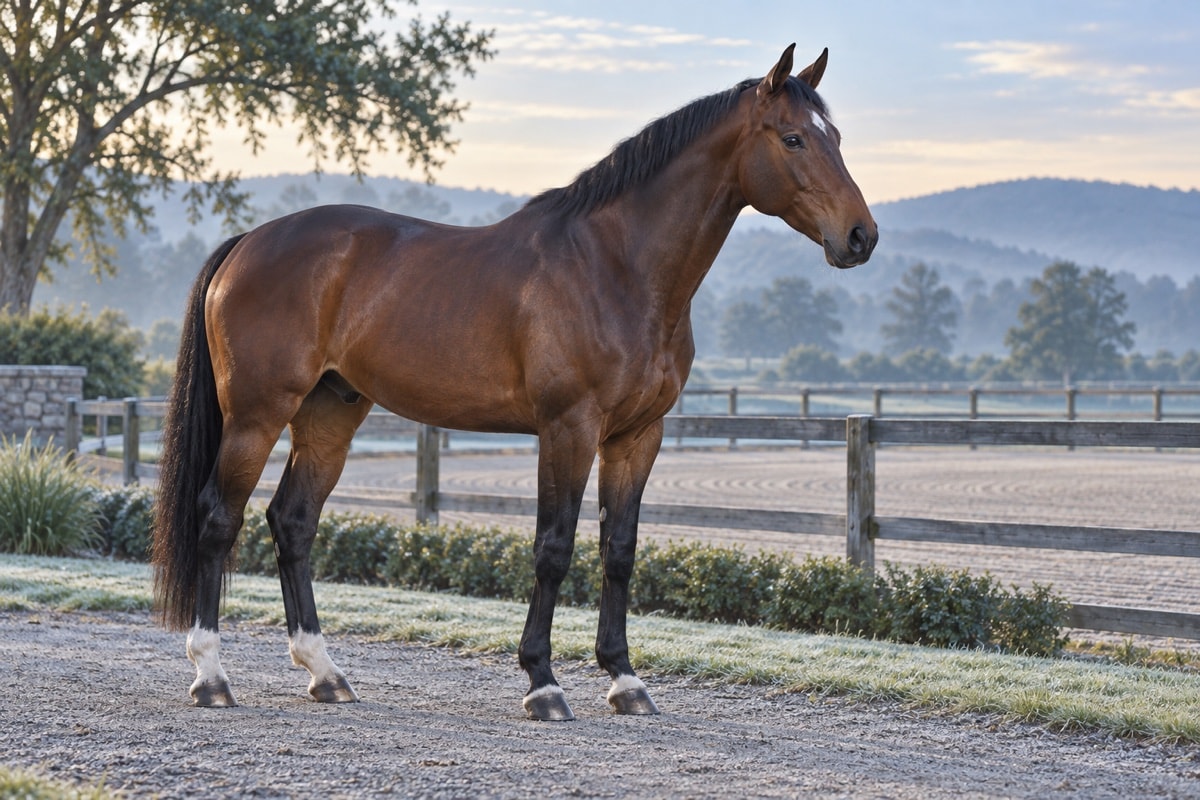
Conditioning is the gradual preparation of a horse’s whole system for a particular kind of work. Heart, lungs, muscles, bone, tendons, ligaments, joints, hooves and attention all adapt on different timelines. A horse that feels energetic may not yet have the tissue capacity for a sudden increase in speed, duration, jumping effort or difficult footing. Good programs make room for those differences.
Start with the work the horse actually does
“Fit” has no single meaning. A dressage horse needs repeated balance and controlled power. A jumper must produce and absorb force. A reining or cutting horse works through acceleration, deceleration and rapid changes of direction. An endurance horse develops sustained aerobic capacity and efficient travel. A pleasure horse may need steady strength for hills and varied terrain. Conditioning should reflect the real task, not an abstract idea of exercise.
A baseline record helps owners notice change. Note the horse’s normal way of standing, moving out, breathing after familiar work, eating, drinking and settling afterward. Look at all four limbs rather than only the one that once had a problem. Hoof balance, surface, tack, rider balance, travel and recent changes in workload all belong in the picture.
Warm-up and cool-down are transitions
A warm-up shifts the horse from rest toward the demands of the session. It allows time to observe rhythm, straightness, willingness and the feel of the footing before intensity rises. The content depends on discipline, age, weather and the individual horse. It should not be a hurried ritual performed identically every day.
Cool-down reverses that transition. Easy movement after harder work gives the horse time to settle while the rider observes recovery. Weather changes the job: heat, humidity, cold and wind affect how quickly a horse returns to normal. University extension horse care and management resources offer a useful starting point for seasonal care and cooling topics, but an individual horse’s needs still deserve professional guidance.
Tendons, ligaments, joints and hooves
The superficial digital flexor tendon runs down the back of the lower limb and is one of the structures horse people often mean when discussing a “bowed tendon.” The suspensory apparatus supports the fetlock and experiences substantial load in athletic work. These structures transmit and store force; they cannot be evaluated reliably from a general checklist or a photograph.
Joints and hooves complete the chain. Footing that is deep, hard, uneven or suddenly different can change how force travels through the limb. Hoof growth and trimming or shoeing cycles alter balance over time. A small change in stride may reflect many possible causes, which is why labeling a tendon, joint or hoof problem without examination is risky.
Describe footing more precisely than arena or trail. An arena can be deep along the rail and firmer through the center; a trail may change from packed ground to loose material within the same ride. Turns, slopes and repeated passes over a worn patch belong in the description too. The label on the facility tells less than the surface the horse actually crossed. Note those differences when comparing apparently similar sessions, without deciding from the surface alone which part of a horse’s leg is involved.
Owners can contribute careful observation. Compare limbs for new heat or swelling, watch the horse walk and turn, and notice changes in performance or attitude. The useful action is not to name the tissue at home; it is to recognize that the horse is different and communicate that change clearly to the veterinarian.
Layup changes more than fitness
Time away from work affects strength, coordination, routine and behavior as well as cardiovascular fitness. A horse may feel fresh before the body is prepared for former demands. Confinement can also change how safely a horse handles the first days of controlled activity. The reason for layup matters: a routine seasonal break is not the same as time off for diagnosed injury.
When an injury is involved, tissue healing is a biological process that cannot be judged only by enthusiasm or the absence of obvious swelling. Tendons and ligaments repair through stages, and the developing tissue must be assessed in the context of the original injury. Clinical examination and, when appropriate, imaging help the veterinarian decide whether workload should advance, remain steady or step back.
Return to work is a feedback loop
A veterinarian-led return plan is individualized to the structure involved, the severity and age of the injury, the horse’s behavior, footing, available facilities and the intended job. The plan may change after rechecks. The American Association of Equine Practitioners provides horse-owner education that reinforces the value of working from qualified veterinary guidance.
For the owner, the key habit is consistent feedback. Keep a simple work log. Record duration and general type of exercise, surface, how the horse felt, and any change later that day or the next. Patterns matter more than one dramatic note. A log also prevents memory from quietly turning an easy week into a harder one.
After a demanding week, keep observations separate from explanations. A shorter stride on a turn is something to describe; a guess about the tissue responsible is a different matter. Note whether a change was visible before work, during it or afterward, and whether the footing had changed since the previous session. Include uneventful sessions so the veterinarian can see the surrounding pattern. The notes supply context for veterinary judgment; they do not establish that a particular surface is suitable or that the horse is ready for more work.
Progress is not defined by the calendar alone. It is the relationship between planned work and the horse’s response. When that response changes, the plan changes with it. Patience is not lost training time; it is part of the training.
A durable performance culture
The horse show, trail ride or competition is only the visible point of a longer cycle. Preparation, recovery, ordinary hoof care, rest, observation and professional teamwork make the event possible. That perspective belongs naturally beside EquinePost’s columns on dressage, reining and cutting, traveling with horses and show management. It treats the horse not as a result on a board, but as an athlete whose working life is built one sensible day at a time.
For the wider seasonal picture, continue to the equestrian discipline calendar. For general health topics, the University of Minnesota Extension’s horse health library provides owner-oriented educational material.