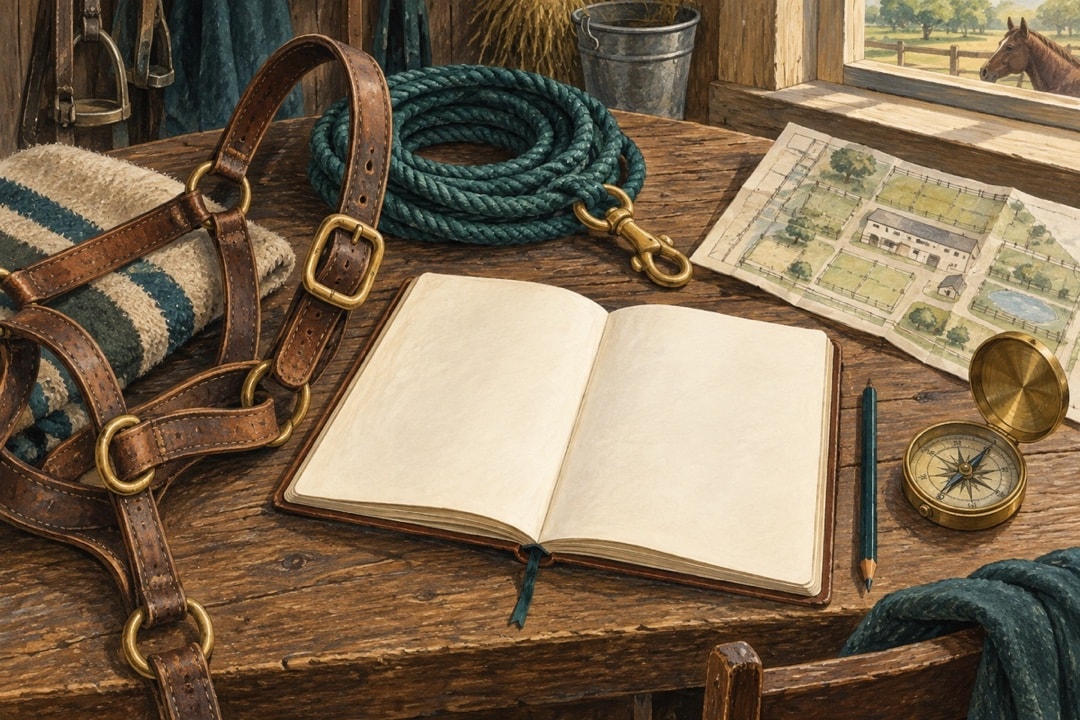
EquinePost’s shopping section worked less like a single store and more like a map of horse-related websites. Its categories reflected the material culture around the barn: what riders wore, what horses needed, how homes displayed equestrian art, and where readers found books or magazines. The directory mixed editorial navigation with commercial material, and its categories reveal the historical shape of the horse world online.
What the categories covered
Apparel and riding gear
Clothing for work around the barn sat beside discipline-specific riding wear, boots and protective equipment. The category boundary was practical: items for the rider rather than tack fitted to the horse.
Tack and stable supplies
Saddles, bridles, grooming tools, blankets and barn equipment formed the working core. Fit, construction, purpose and safe use mattered more than brand or appearance.
Books and magazines
Training manuals, histories, fiction, breed references and equestrian periodicals gave horse people another way into the subject. This category naturally overlapped with Canter Magazine’s cultural interests.
Art and collectibles
Prints, sculpture, model horses and old tack treated the horse as image and artifact. Collecting could be playful, decorative or historical depending on the reader.
Home, barn and gifts
Stable signs, household objects and horse-themed gifts connected equestrian identity with the spaces where people lived and worked.
Toys and games
Model horses, games and imaginative play gave younger horse lovers a way to build a horse world before—or without—ownership.
Why directory judgment mattered
A directory made an implied promise: someone had considered whether a link belonged. That promise was always imperfect. A site could change ownership, revise its policies, close or become something entirely different. The responsible reader still needed to check who operated a page, whether product claims were supported and whether return, privacy and safety information was current.
The resource spotlight guide carries that editorial idea into a general checklist for judging equine information. It asks who wrote a page, what evidence supports it, when it was updated, and whether a sales model is shaping the advice.
The lasting value of the map
The old category list says something about horse culture even after the individual listings are gone. It places art beside tack, magazines beside riding apparel, and toys beside barn supplies. Horse life has always joined work, recreation, identity and imagination. For the literary side of that world, continue to Canter Magazine; for practical and historical reading, browse the article library.